The queue went vague at the corner
 Platapode ·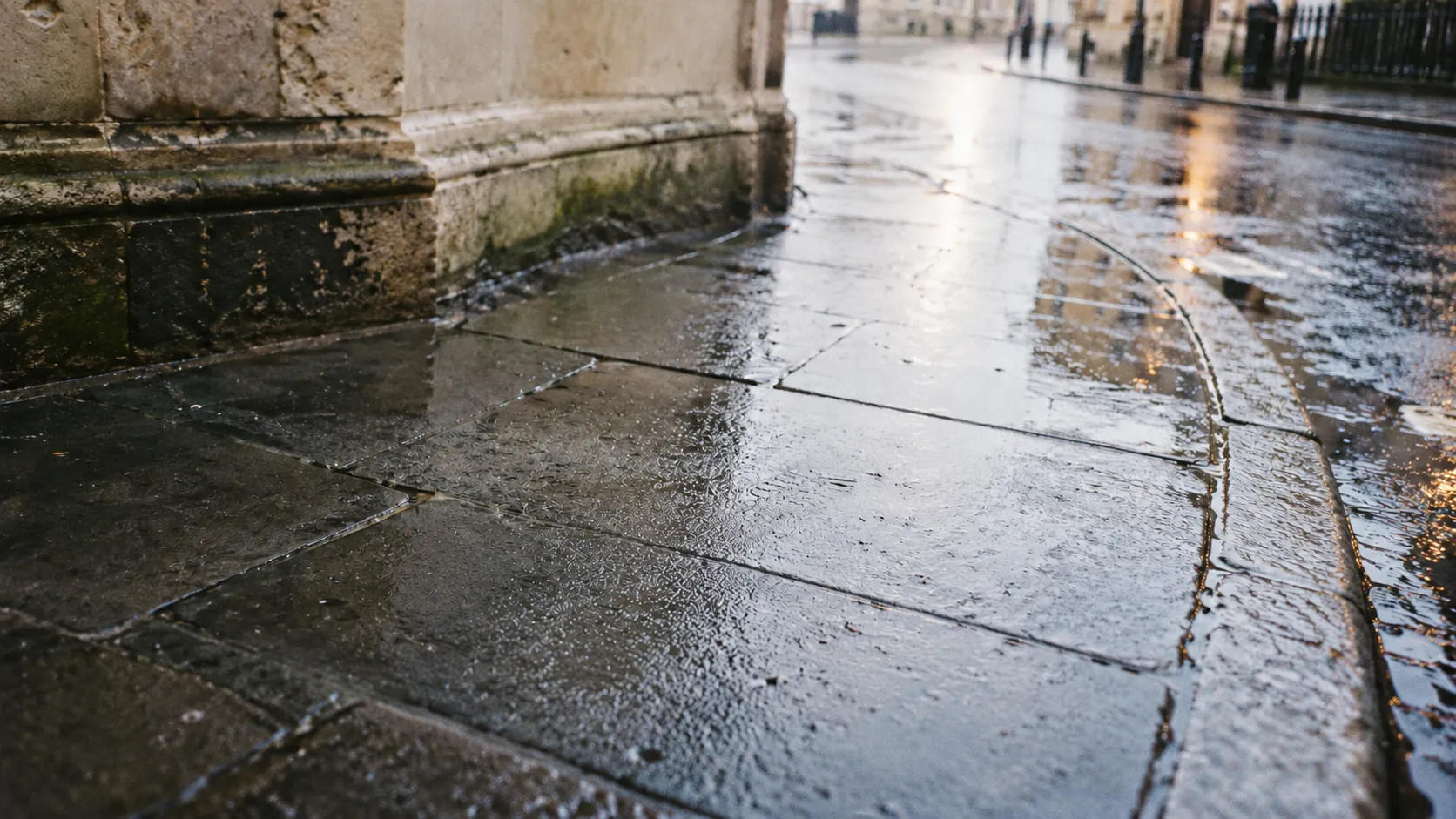
The queue ran along the wall, turned left at the corner, and carried on out of sight. At the bend, a man stood very still, glancing both ways, not quite sure which side of the corner he was on.
Everyone behind him had the same problem. From the back, you couldn't see the front. From the front, you couldn't see the back. And somewhere around that corner, the queue stopped being a line and started being a matter of opinion.
That corner is the most interesting place in any queue. It's where you can see the rule start to run out.
It starts with a glance
Watch anyone join a queue, and before they do anything else, they look. Down the line to the front, back along it to the end, a quick check of who's who. It takes about a second.
That glance does a lot of work. It finds the back. It notes the person you'll be standing behind. It checks whether anyone's about to arrive at the same moment, and if so, who got there first. And it tells everyone already in the line that you've seen them, which is its own small promise.
Nobody explains any of this. There's no sign that says "look first". But the glance is how a queue gets read and passed on, and it only works because the line is there to be looked at. The whole arrangement depends on the fact that you can see where you fit, and everyone else can see you fitting there.
Everyone keeps an eye on everyone
Once you're in, the watching doesn't stop. It just gets quieter.
You keep track of the back of the person in front. You notice, without turning round, roughly who's behind you. When the front moves, the gap in front of you gets closed, sometimes a bit too eagerly, and someone behind closes theirs. The whole line shuffles forward in a sort of slow ripple, each person moving because they saw the person ahead move.
And when something doesn't fit, the line notices all at once.
Someone wanders up towards the middle, looking vaguely at a sign on the wall, drifting a little closer with every step. Heads turn. Nobody says anything yet. The people nearest him straighten slightly and stand a fraction closer together, closing a gap that was never really a gap. He reads it, finds the back, and goes.
A group arrives in instalments. First one person, who joins properly. Then, a few minutes later, a second, who walks straight to the first and says "we're together". Then a third. You can watch the people behind them go through a small, silent calculation: is that allowed, how many more are coming, does anyone mind enough to say something? Usually nobody does. But everyone looks, and everyone knows everyone looked.
And there's the one who reaches the counter from the side, not the back, "just asking a question". The whole line tightens. Someone near the front shifts their weight. Someone else clears their throat, very slightly. It's not a protest, just a line full of strangers letting it be known that they saw.
None of that is spoken. It doesn't need to be. A queue's rules are enforced almost entirely by being seen to notice. Each small breach gets met by a dozen pairs of eyes, and the eyes are usually enough.
Past the corner
Now go back to the corner.
On the near side, everything works. People can see the line, see their place in it, see anyone who tries to wander in. On the far side, the view runs out. The people round the bend can't see the front, so they can't tell how fast it's moving or whether the line has split in two. The people at the front can't see the back, so they have no idea how long it's got, or whether someone has joined halfway.
And the line starts to change shape. It thickens. Two people end up side by side, neither quite sure who was first. A second little line forms next to the first. Someone arrives, can't see where the end is, and hovers in a sort of middle distance, technically in the queue and technically not. Nobody at the bend is behaving worse than anyone at the front. They just can't see what they're supposed to be keeping.
That's the whole thing, in one bend in a wall. The rule doesn't live in people's heads, waiting to be applied. It lives in what they can see. Cooperation between strangers has a range, and the range is line of sight.
The loose crowd by the door
The same thing happens without a corner, in any wide open space.
Waiting in line outside a doorway that hasn't opened yet rarely looks like a line. It looks like a loose semicircle, people standing at polite distances, each one quietly keeping track of the handful of faces who were there before them. The order still exists, but it's held in memory rather than in a row, and memory is shakier than sight. Newcomers can't read it. Everyone's a little on edge.
When the door opens, it's never quite a stampede, but it's never quite a line either. It's a gentle negotiation between people who each have their own version of who was first. It's people at their most civil and their most uncertain at the same time.
Twenty minutes, then gone
And then, whatever the queue was for arrives. The counter opens, the doors part, the last ticket is sold. Within seconds, the whole thing is gone. The strangers who spent twenty minutes keeping each other in order walk off in different directions and never think about each other again. There's no trace of the line, no memory of who stood where. The whole small society dissolves without regret.
Tomorrow, somewhere else, two people will stand near a counter, and a third will arrive and stand behind them instead of beside them. It'll all start again, with the same rules nobody wrote down, held together the same way.
Just not round the corner, where nobody can quite see.